After reading this article on mental illness, I asked the app this question: “Should I seek therapeutic help or convince myself everything will eventually come together and hope for the best?”
Here is the output from the app:
Opportunity Cost Analysis
Why This Model Applies: The user’s dilemma presents a classic opportunity cost scenario. Choosing to “hope for the best” and avoid therapy means foregoing the potential benefits of professional help. This model allows us to explicitly analyze the potential gains and losses associated with each path, facilitating a more rational decision. It also naturally integrates with other models like the ROI framework and Systems Thinking, recognizing that mental well-being is a system impacting various aspects of life.
SPECIFIC PRODUCT RECOMMENDATIONS: Since the “product” here is therapeutic help, we’ll focus on different therapy modalities and platforms.
Framework Application:
- Situational Analysis: The user is experiencing an unspecified level of emotional distress or mental health challenge. They are considering two main paths: (a) self-management through positive thinking and hoping for improvement, and (b) seeking professional therapeutic help. The opportunity cost analysis evaluates the potential gains and losses associated with each path.
- Key Selection Criteria: The key criteria will be:
- Effectiveness: Likelihood of achieving a desired improvement in mental well-being.
- Time Investment: Time commitment required for each approach (therapy sessions vs. self-help reading/practice).
- Financial Cost: Direct financial outlay (therapy fees vs. self-help book/app costs).
- Accessibility: Ease of access to resources (availability of therapists vs. online resources).
- Long-term Sustainability: How well each approach maintains mental well-being over time.
- Product Options:
- Product Comparison Table (extract):
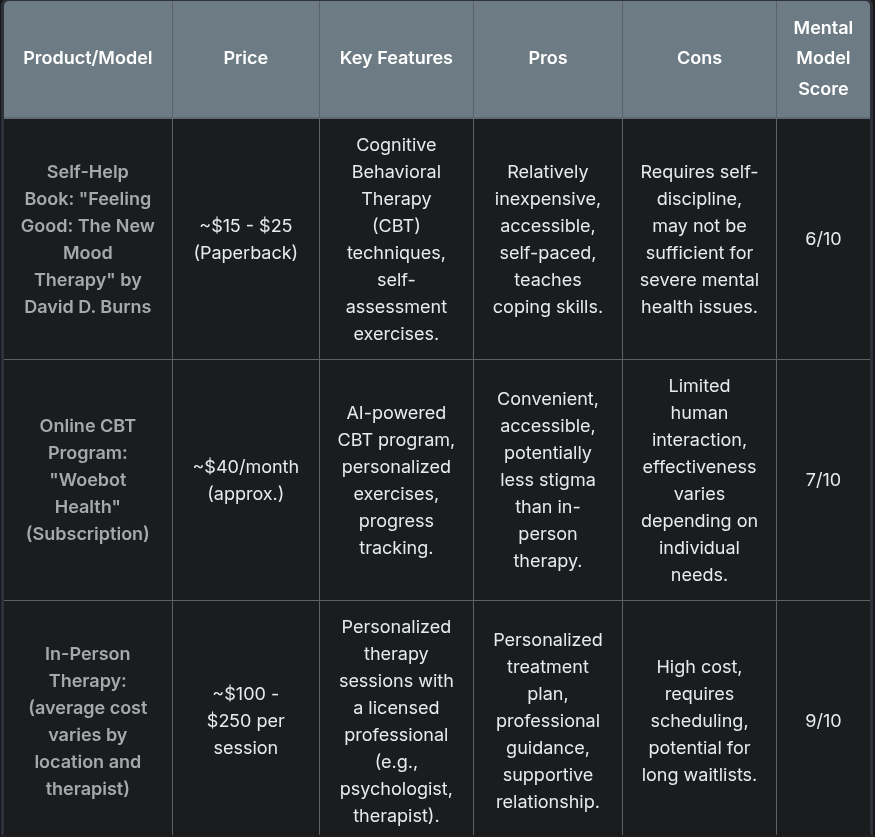
Top Recommendation:
In-person therapy offers the highest potential ROI in terms of effectiveness and long-term mental well-being, despite its higher cost and time investment. The Opportunity Cost of not addressing potential mental health issues effectively far outweighs the financial investment in professional help, particularly if the problem is impacting daily life. The mental model score reflects this balance.
Action Steps:
- Where to purchase: For in-person therapy, search for licensed therapists in your area through Psychology Today, your insurance provider’s network, or your primary care physician. For online options, visit the websites of BetterHelp or Woebot Health.
- What to look for when buying: Thoroughly research therapists’ qualifications, specializations, and client reviews. For online platforms, check reviews and ensure the therapist is licensed in your state.
- How to negotiate or get the best deal: Negotiate payment plans with therapists if needed. Explore your insurance coverage for mental health services. Look for introductory offers or discounts on online platforms.
- Timeline for making the decision: Schedule a consultation with a therapist within the next 2 weeks to discuss your needs and assess the suitability of therapy.
Key Questions:
- If your mental health doesn’t improve within a reasonable timeframe with self-help strategies, will you regret not seeking professional help sooner?
- What are the potential long-term consequences of delaying professional intervention, if needed, compared to the short-term cost of therapy?
- What level of improvement in your mental well-being would justify the cost and time investment of professional therapy?
The mentalmodelsapp platform suggests that instead of letting this decision paralyze us, we can apply a powerful analytical tool: the opportunity cost model. By using the app, you gain three key benefits that can help you navigate this difficult choice.
1. It Frames Your Decision in a Structured Way
The app helps you move beyond the emotional weight of the question and into a structured analysis. Instead of grappling with vague fears and desires, you’re prompted to consider the tangible and intangible costs of each option. What is the opportunity cost of not seeking help? It could be the loss of time, prolonged emotional distress, or missed opportunities for personal growth. Conversely, what is the opportunity cost of seeking help? This might include financial costs, time commitment, or the vulnerability of opening up to a professional. The app forces you to define and weigh these factors, turning a nebulous emotional conflict into a clear, comparative analysis.
2. It Provides an Objective Lens
Our decisions are often clouded by personal biases and wishful thinking. The mental models app acts as an objective third party, guiding you through a process that minimizes these biases. By using the opportunity cost model, you’re not just considering what feels right, but what the data—your own defined costs and benefits—actually suggests. This allows you to make a decision based on a more rational evaluation, rather than being swayed by the hope that things will magically get better without action.
3. It Empowers You to Make an Informed Choice
Ultimately, the goal of the mental models app is to empower you. The decision to seek help or to wait it out is deeply personal, and there is no single right answer for everyone. However, an informed decision is always better than a reactive one. The app doesn’t make the choice for you, but it gives you the tools to understand the full implications of each path. By using the opportunity cost model, you gain the clarity and confidence needed to make a choice that aligns with your long-term well-being.
Ready to move from hope to clarity? Apply the opportunity cost model to your own difficult choices and start making persistent decisions today.
Written for the Mental Models App by Hyper Lexia — may your decisions be as sharp as your curiosity.
 Persistent Decisions